Taylor Long · 23 November 2026
Cross-Border Mountain Forums Tie Reforestation Policies to Heat-Tolerant Farming Methods in Highland Zones
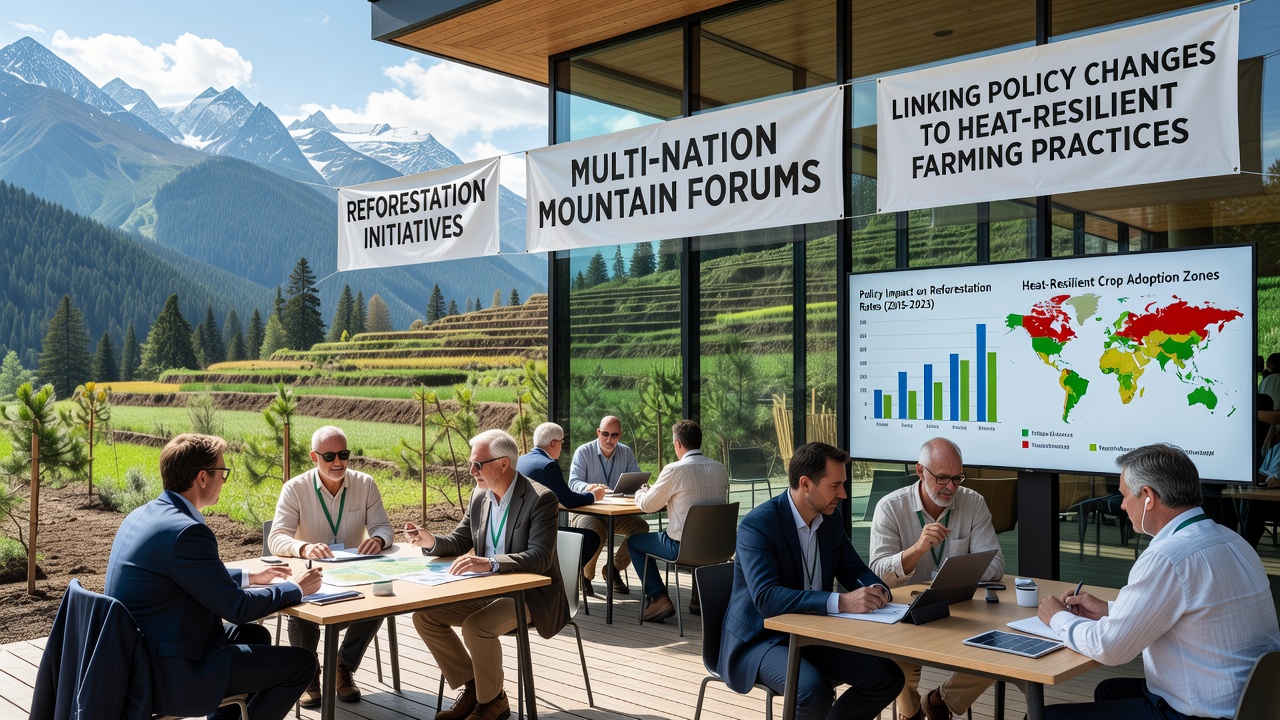
Multi-nation mountain forums have expanded their scope in recent years to coordinate reforestation projects that connect directly with policy adjustments supporting heat-resilient farming practices. These gatherings bring together representatives from alpine, Andean, and Himalayan zones where rising temperatures have altered growing seasons and soil conditions. Data from regional monitoring networks shows that coordinated tree planting along elevation gradients helps moderate local microclimates while providing windbreaks and soil stabilization for adjacent agricultural plots.
Policy Mechanisms Driving Coordinated Action
Governments across participating nations have adjusted subsidy structures and land-use regulations to prioritize native species restoration in upper catchments. Researchers tracking these changes note that such adjustments often include incentives for farmers who integrate tree cover into existing crop systems rather than treating reforestation as a separate land-use category. In November 2026 several forums plan to review updated carbon accounting methods that assign measurable benefits to agroforestry arrangements spanning national borders.
One study coordinated through the Mountain Partnership documented how revised permitting processes in three countries reduced approval times for mixed forest-farm projects by nearly half. Observers note that these procedural shifts allow quicker implementation of heat-tolerant varieties such as drought-resistant maize and certain legume species that benefit from partial shade provided by newly planted canopy layers.
Practical Applications Across Regions
Reforestation crews working in the Julian Alps have planted mixed stands of beech and fir that create shaded corridors linking protected areas with working farmland. Similar efforts in the Andes focus on Polylepis woodlands restored alongside quinoa and potato terraces. Those who've studied the outcomes report that soil moisture retention improves measurably within three growing seasons when tree density reaches levels recommended by forum guidelines.
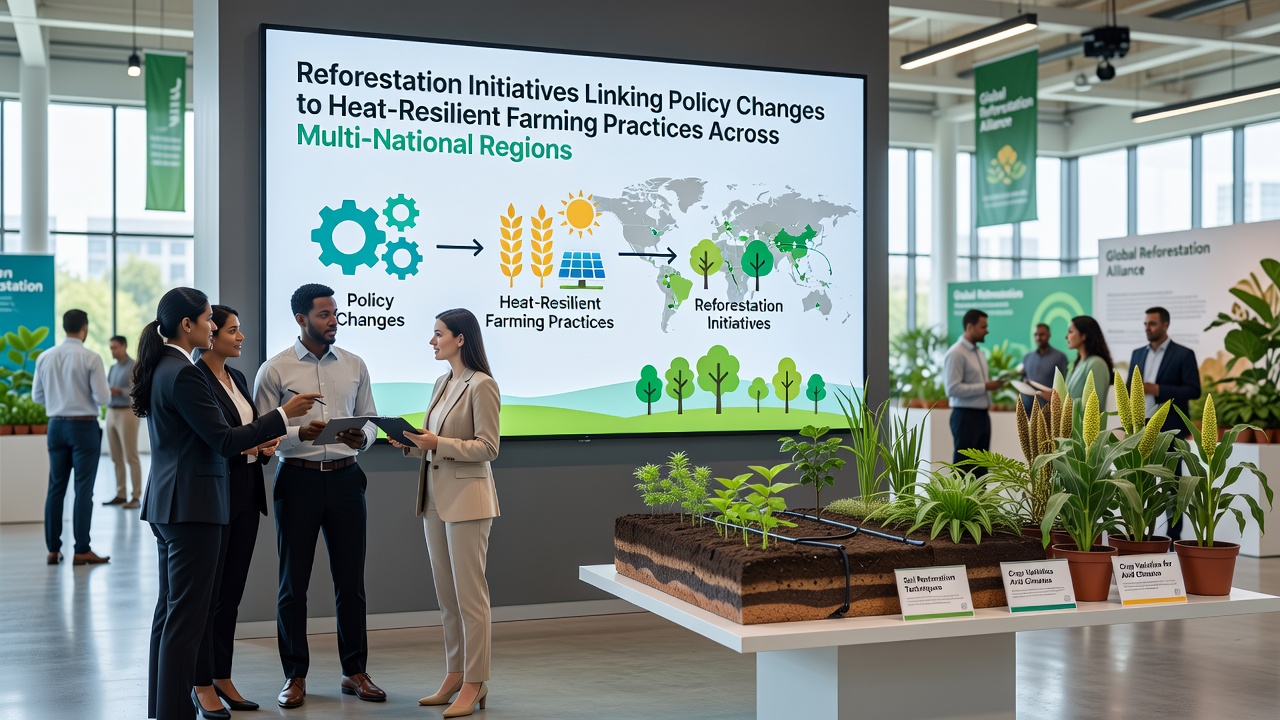
Policy changes in several jurisdictions now require environmental impact assessments to include projections for both forest recovery and crop yield stability under higher temperature scenarios. This integrated approach replaces earlier siloed reviews that treated forestry and agriculture as unrelated sectors. Evidence from pilot sites indicates that farms located within two kilometers of restored forest patches experience reduced evapotranspiration stress during peak summer heat.
Data and Monitoring Developments
According to records maintained by the Food and Agriculture Organization, participating mountain forums have standardized remote-sensing protocols that track both canopy expansion and changes in agricultural productivity. These datasets allow planners to adjust planting densities and species mixes based on observed performance rather than modeled estimates alone. Figures released in late 2025 revealed that sites combining reforestation with heat-resilient crop rotations maintained yields within five percent of baseline levels despite a recorded increase of 1.2 degrees Celsius in mean summer temperatures.
Academic groups affiliated with the University of British Columbia have contributed comparative analyses of similar initiatives in the Canadian Rockies and the Swiss Prealps. Their findings highlight how cross-border data sharing accelerates identification of effective tree-crop combinations. The Mountain Partnership continues to host technical working groups that refine these protocols ahead of the November 2026 review cycle.
Challenges in Implementation
Land tenure differences between nations create ongoing administrative hurdles even when policy intent aligns. Forum participants report that mapping exercises must reconcile varying definitions of communal versus private land before reforestation targets can be finalized. Yet standardized soil sampling methods adopted in 2024 have already improved consistency of baseline measurements across these diverse tenure systems.
Seed supply chains for native species remain a constraint in several high-elevation zones. Collaborative nurseries established under forum agreements now distribute planting stock across borders, reducing transport times and improving survival rates. Those monitoring early results note that survival percentages exceed eighty percent when seedlings are sourced from local provenances rather than distant nurseries.
Conclusion
Reforestation initiatives coordinated through multi-nation mountain forums continue to evolve alongside policy adjustments that support heat-resilient farming. The linkage between restored forest cover and agricultural adaptation rests on documented improvements in microclimate regulation and soil function. Ongoing data collection through November 2026 and beyond will clarify which combinations of species and management practices deliver the most reliable outcomes across different mountain ranges.