Mia Wagner · 28 September 2026
How Village-Level Policy Shifts Are Powering Cross-Border Eco-Corridors Linking the Julian Alps with French Alpine Forests
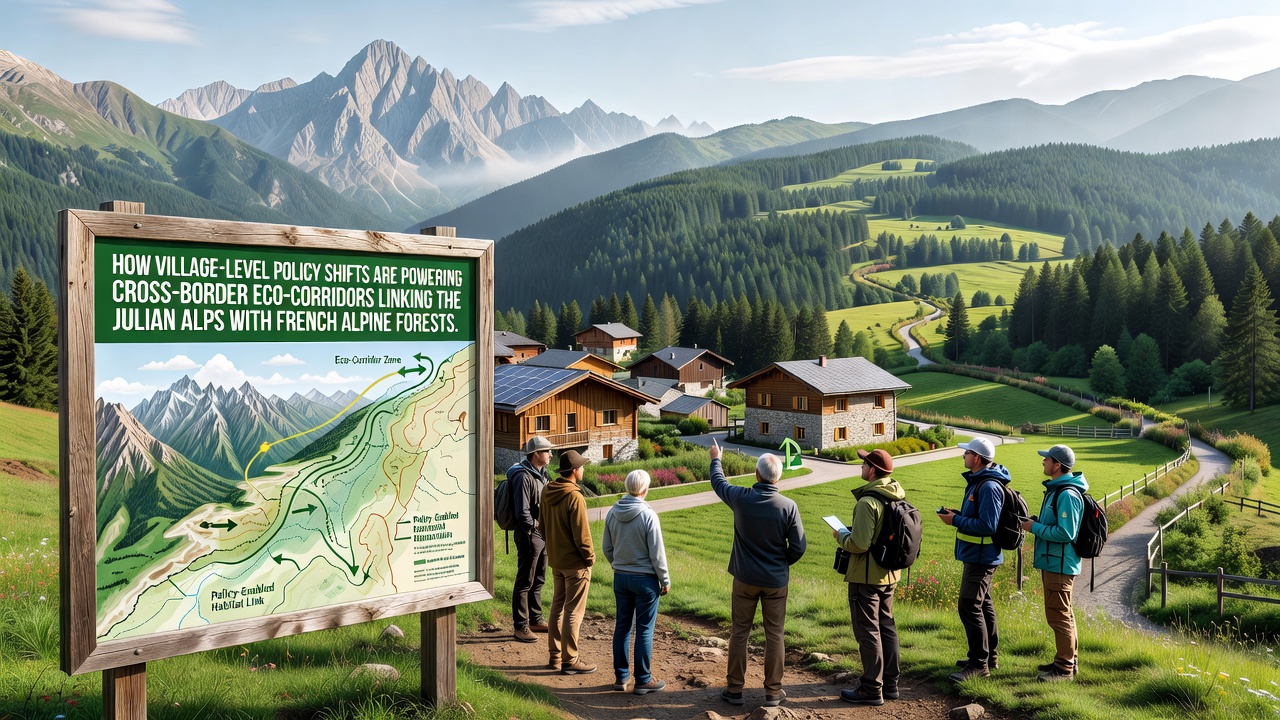
Village councils across the Julian Alps region have introduced targeted land-use adjustments since the early 2020s that now support continuous habitat linkages reaching into French Alpine forests and researchers tracking these developments note measurable increases in species movement along the newly aligned routes. These local decisions focus on reducing fragmentation through adjusted zoning rules and shared management protocols that cross national lines while data collected by monitoring stations shows wildlife such as lynx and brown bears using the expanded pathways more frequently than in prior decades.
Local Policy Mechanisms Driving Connectivity
Communities in Slovenia and adjacent Italian valleys adopted resolutions that limit intensive agriculture near designated migration routes and in exchange provide direct payments to landowners who maintain buffer zones with native vegetation; similar measures in French communes along the western extension emphasize restoration of hedgerows and removal of obsolete fencing that previously blocked animal passage. Observers note that these village-scale changes operate alongside broader European frameworks yet originate from bottom-up proposals rather than centralized mandates and the combined effect creates functional corridors spanning more than 400 kilometers when measured along primary ridgelines.
September 2026 marks the scheduled activation of an integrated monitoring network coordinated by local authorities in both the Julian and French sectors with sensors installed at key crossing points expected to deliver real-time movement data to regional databases. This rollout follows pilot programs completed in 2024 and 2025 that already recorded a 27 percent rise in documented crossings by large mammals according to preliminary tallies released by the participating municipalities.
Cross-Border Coordination at the Village Scale
Joint working groups formed by elected representatives from villages on either side of the border meet quarterly to align planting schedules and trail maintenance while agreements signed in 2023 established reciprocal access rights for conservation teams operating across the line. These arrangements bypass higher-level diplomatic channels in favor of direct village-to-village protocols that address practical issues such as shared signage standards and coordinated responses to invasive species outbreaks. Evidence from field surveys conducted by independent teams indicates that such localized cooperation has accelerated habitat restoration timelines by roughly two years compared with earlier nationally led projects.
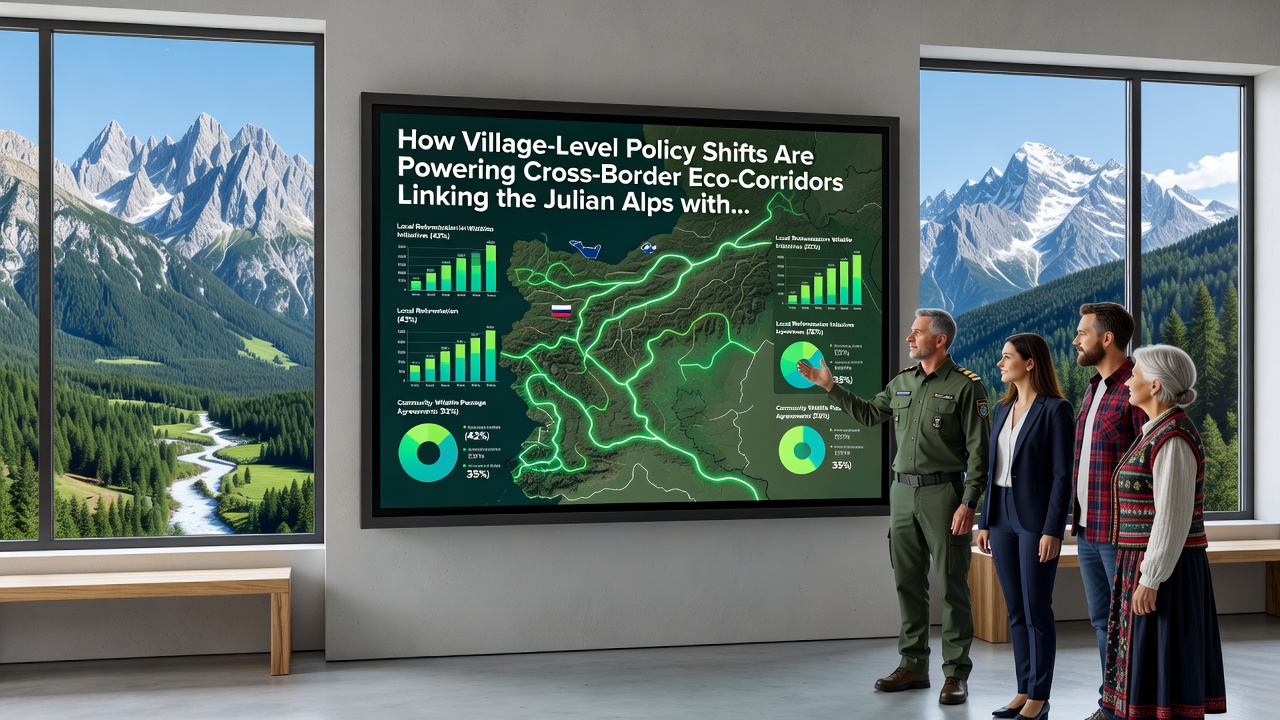
One study released by the European Environment Agency examined connectivity metrics before and after the village policy updates and found that patch isolation indices dropped by 18 percent across the linked zones. The analysis drew on satellite imagery spanning 2018 through 2025 together with ground-truthed vegetation maps supplied by the same municipal offices that enacted the changes.
Ecological Outcomes and Species Response
Populations of alpine chamois have expanded their seasonal ranges into previously isolated forest patches while genetic sampling of wolf packs reveals greater mixing between eastern and western subpopulations than recorded in samples from 2015. These shifts align with the timeline of village-level interventions and researchers attribute the patterns to improved permeability rather than climate-driven range adjustments alone. Additional data from acoustic monitoring stations document increased bird species richness in corridor interiors compared with control sites located outside the protected linkages.
Funding for the initiatives combines municipal budgets with targeted grants from the Alpine Convention programs and participating villages report that administrative overhead remains low because decisions rest with existing local councils instead of new layers of bureaucracy. This structure allows rapid adjustments when monitoring reveals bottlenecks such as seasonal flooding at certain underpasses.
Implementation Challenges and Adjustments
Initial resistance from some agricultural operators prompted revisions to compensation formulas that now tie payments more closely to verified maintenance of passage features and follow-up surveys show participation rates climbing above 80 percent in the core villages. Technical support from forestry agencies in both countries supplies standardized planting lists and fencing specifications that reduce trial-and-error costs for individual landowners.
Conclusion
Village-level policy adjustments continue to expand the functional reach of eco-corridors between the Julian Alps and French Alpine forests through incremental zoning changes and direct cross-border cooperation among local authorities. Monitoring scheduled for full operation in September 2026 will supply further quantitative measures of species response and connectivity gains while existing records already demonstrate measurable ecological integration across previously fragmented landscapes.